We use cookies to make your experience better. To comply with the e-Privacy directive, we need to ask for your consent to set the cookies. Learn more.


Truck Monitoring Systems & DVS Phase 2
Truck monitoring systems have become a crucial driver assistance within commercial vehicle fleets, reducing accidents in densely populated cities such as London. Among the various components of these systems, the Blind Spot Information System (BSIS) and Moving off Information System (MOIS), plays a significant role in establishing safety of not only the drivers but also vulnerable road users (VRUs) such as pedestrians and cyclists.
Given the growing concern and increasing focus on safety regulations such as Transport for London (TfL) Direct Vision Standard Phase 2, the integration of BSIS and MOIS into commercial vehicles is becoming more than just guidance — it's a requirement for enhanced road safety.
Importance of Truck Monitoring Systems and Blind Spot Minimisation
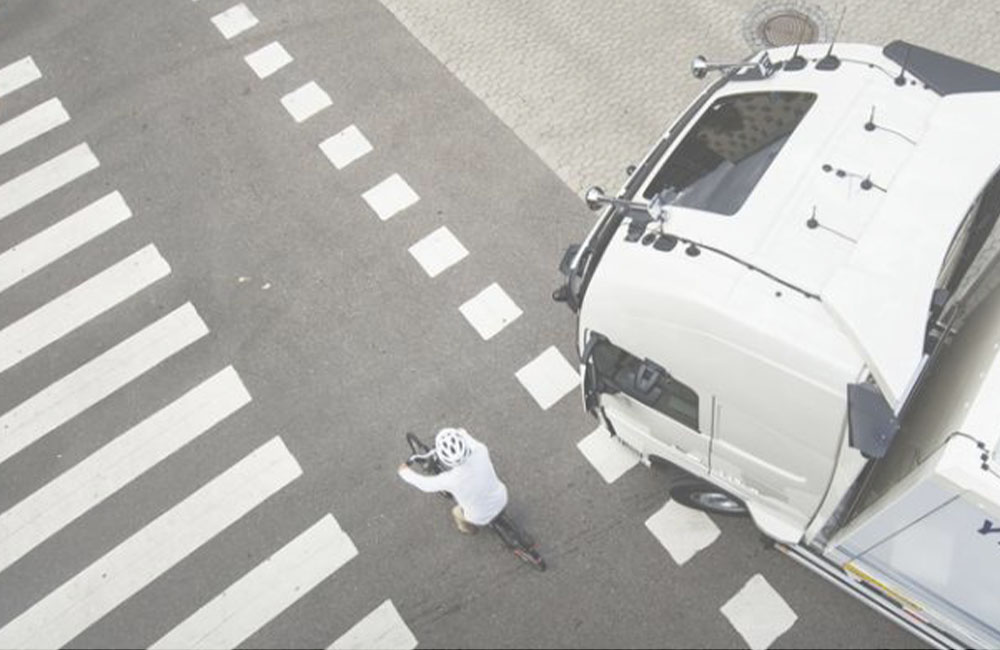
One of the most important functions of any Truck Monitoring System is blind spot management, which can be most challenging in highly dense urban environments. Although Heavy Goods Vehicles (HGVs) make up only 4% of the total mileage for travelling across London, they contributed to almost half of fatal collisions with cyclists and 20% with pedestrians, according to LCC. Traditional vehicle mirrors, while essential, offer a limited field of vision. This makes it challenging for drivers, particularly those operating large trucks, to maintain complete situational awareness. The result could be accidents, more so when performing any kind of manoeuvre on the road, like lane changes or turns.
Research from TfL has shown that VRUs are fearful that the drivers of HGVs will not see them using mirrors and Vehicle Display Units (VDUs), which are shared by many cyclists. This requirement for advanced monitoring systems to provide reassurance to VRUs concerning improvement in road safety is underlined by this mistrust. This is where advanced truck monitoring systems with BSIS & MOIS come in. They display live information through visual and audio alerts about objects or people within a driver's blind spot. This technology is particularly beneficial in environments where the interactions between commercial vehicles and VRUs are frequent and considered part of the daily driving routine.

What are BSIS & MOIS
Truck Monitoring Systems, especially those integrated with a Blind Spot Information System and Moving off Information System, are developed to go beyond the capabilities of what can be achieved by the conventional blind spot mirrors. Durite's BSIS uses AI-powered algorithms in conjunction with cameras and sensors to monitor areas around the vehicle that may not be visible to the driver. The latest BSIS is far advanced than the older systems that can get triggered by stationary objects and create false alarms. The advanced systems can differentiate between static and dynamic objects that may present a hazard in the blind spots. This sophistication ensures that the driver is warned of a genuine collision risk.
When the system detects a potential impact, it activates a warning to the driver. South Wales Fire & Rescue Service reports that 98% of all road crashes are linked to some form of human error. Therefore, the precision and reliability of BSIS and MOIS technology plays a crucial role in protecting both drivers and vulnerable road users, reducing the risk from human error.
Durite Truck Monitoring Systems
Durite is the leader in vehicle safety solutions and offers an advanced BSIS and MOIS as part of its Progressive Safe System (PSS). Developed for the strictest requirements, Durite's PSS does more than just ensure compliance with the TfL's Direct Vision Standard Phase 2; it delivers a complete and comprehensive solution to increase safety. The system has an integrated left-hand side Camera Monitoring System (CMS) for nearside blind-spot elimination. This functionality is particularly useful in metropolitan areas where VRUs are at a higher level of risk.