We use cookies to make your experience better. To comply with the e-Privacy directive, we need to ask for your consent to set the cookies. Learn more.


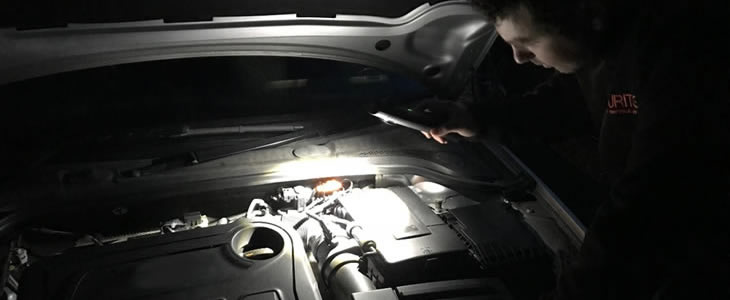
The perfect hand lamp for professionals
The first hand lamp
English inventor David Misell patented the first hand lamp in 1899. It used two innovations; the light bulb and dry cell battery. That made it quite an expensive novelty at the time. Fast-forward 5 years and the latest hand lamp was then three times more efficient than the first model. The hand lamp had become popular!
A continuously growing popularity
The development and growing popularity of the hand lamps have gone hand in hand. Today thousands of models are available from specialist shops, online retailers or even at your local petrol station where you can grab yours for under a tenner. So much so that you probably think “not another one” every time you see a lamp…
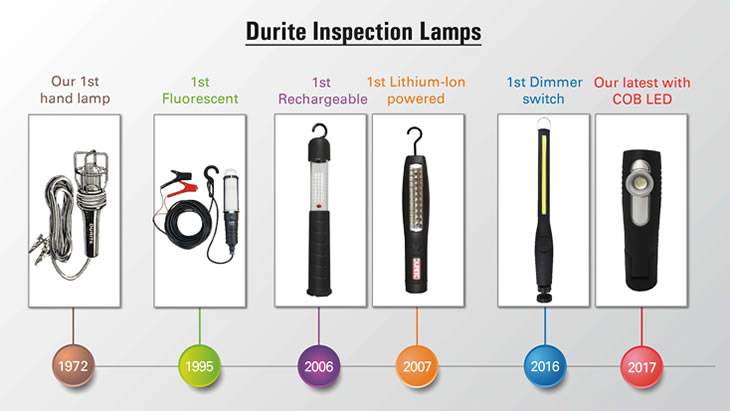
Today’s hand lamps
The two key components of today’s hand lamps are the battery and the LED chips.
SMD technology vs COB LEDs
Most inspection lights use LEDs; SMD (Surfaced Mounted Device) or COB (Chip on Board). This doesn’t come as a surprise when you think that the technology is already 50 years old! But what does LED mean exactly? Not all LED lamps are the same. The different types of LEDs vary by their energy, size, connections and outputs.
Surface Mount Device (SMD) LEDs are small and can produce different coloured lights. They are versatile and thus used everywhere, shop windows, Christmas lights or even on your mobile phone.
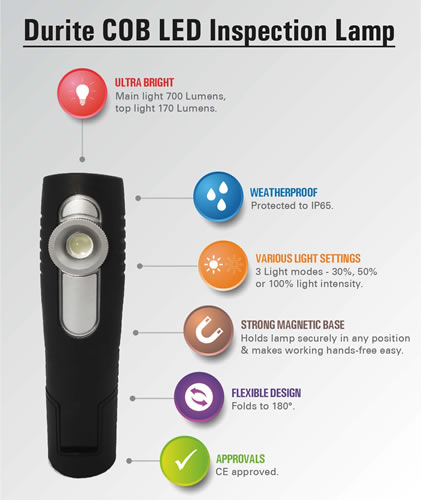
Chip on Board (COB) technology is the latest development in LEDs. If you have an inspection lamp that uses this technology, you can take advantage of a higher light output while using less energy. Since the individual LEDs used in a COB can be mounted close together, they don’t take up much space and you can benefit from the full potential of the LED chips. The adequate heat dissipation of COB LEDs reduces their failure rates and provides a better heat efficiency, which makes them safer and more reliable.
The only drawback from the design of COB chips is that they don’t have the capacity to change colours – but who wants a pink hand lamp anyway?
Power on the go
If it wasn’t for the development of batteries, you wouldn’t be able to be on your laptop or listen to your radio remotely. Rechargeable and non-rechargeable batteries are used in inspection lamps.
Alkaline batteries – non-rechargeable, account for over half of the hand lamps out there. They are cheaper and therefore a popular choice for anyone looking to use a lamp occasionally. Although Alkalines are powerful, this is only short lived and new replacement batteries are soon needed.
For the workshop professional, the rechargeable lithium-ion batteries are more suitable. They keep your light going day in, day out. Plus, the latest models are light and compact. They have a high energy density which means they last over a long period of time and you don’t have to charge your hand lamp as often.
Choosing the right rechargeable inspection lamp
No, not all handlamps are the same. There is a wide spectrum of lamps out there and they are a few things you need to look for. The question you need to ask yourself is “What will I use this handlamp for?”. Different applications dictate different attributes.
- IP rating, Will I be using it outside?
- Light output, The higher the lumen count is, the brighter and the better the light output will be.
- Wattage, Lower wattage means lower power consumption. Your light will work for longer and will need recharging fewer times.
- Design & Size, Do I want to light up areas that are difficult to access?
- Quality of build, Will I use my lamp time and time again?
- Adds-on, Magnet, hooks, top light etc…